Coffee beneath a canopy
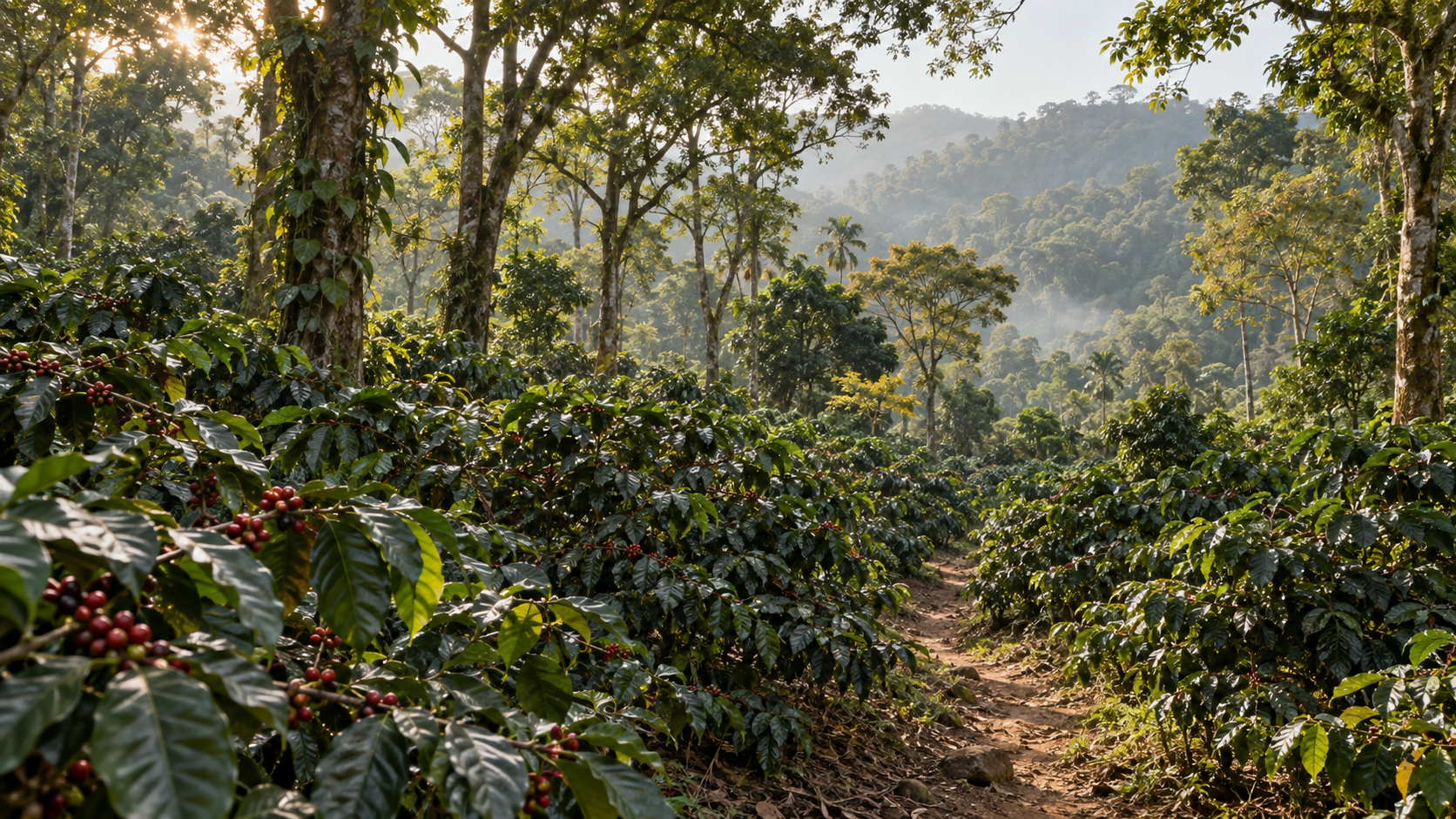
Shade cultivation and mixed planting are central to India’s coffee landscape.
South Indian coffee × Switzerland
When you think of coffee, do you think of India? Follow the regions, traditions and ideas that make it worth a closer look.
01 / The origin
Shade cultivation and mixed planting are central to India’s coffee landscape.
Karnataka, Kerala and Tamil Nadu offer different places, varieties and traditions to explore.
Monsooned Malabar takes a different path: humid coastal air transforms the green beans. This process is specific to monsooned coffee.
Sources: Coffee Board of India.
02 / The Swiss connection
Its import volume is smaller than Brazil’s and Colombia’s, but India already has a meaningful place in Swiss coffee.
of Swiss imports in this green coffee category came from India in 2024.
Keep exploring
Kaapi Route is an independent educational project based in Zürich. We’re exploring South Indian coffee and sharing what we learn.